How Florida Public Records Exemptions Are Created (And Why They Expire Every Five Years)
TL;DR
A Florida public records exemption is not a guess by an agency. It is a general law. Article I, Section 24(c) of the Florida Constitution says the Legislature must pass it by a two-thirds vote of each house, state the public necessity, and write it no broader than necessary. The Open Government Sunset Review Act, Section 119.15, Florida Statutes, then sunsets the exemption on October 2nd of the fifth year unless the Legislature reenacts it. The system is meant to keep secrecy on a short leash.
Who can create a Florida public records exemption?
Only the Legislature. Courts cannot create an exemption. Agencies cannot create one by policy. Section 119.011(8), Florida Statutes, defines an exemption as a provision of general law that takes a record outside the access requirements of Chapter 119. General law means an act of the Legislature.
The Florida Supreme Court made this clear in Wait v. Florida Power and Light Company, 372 So. 2d 420, 425 (Fla. 1979): the Public Records Act "excludes any judicially created privilege of confidentiality." If a court cannot create an exemption, an agency certainly cannot.
This matters in practice. When an agency tells you that a record is "internal" or "sensitive" or "covered by our internal policy," that is not an exemption. Ask them for the statute.
What does the Florida Constitution require for an exemption to be valid?
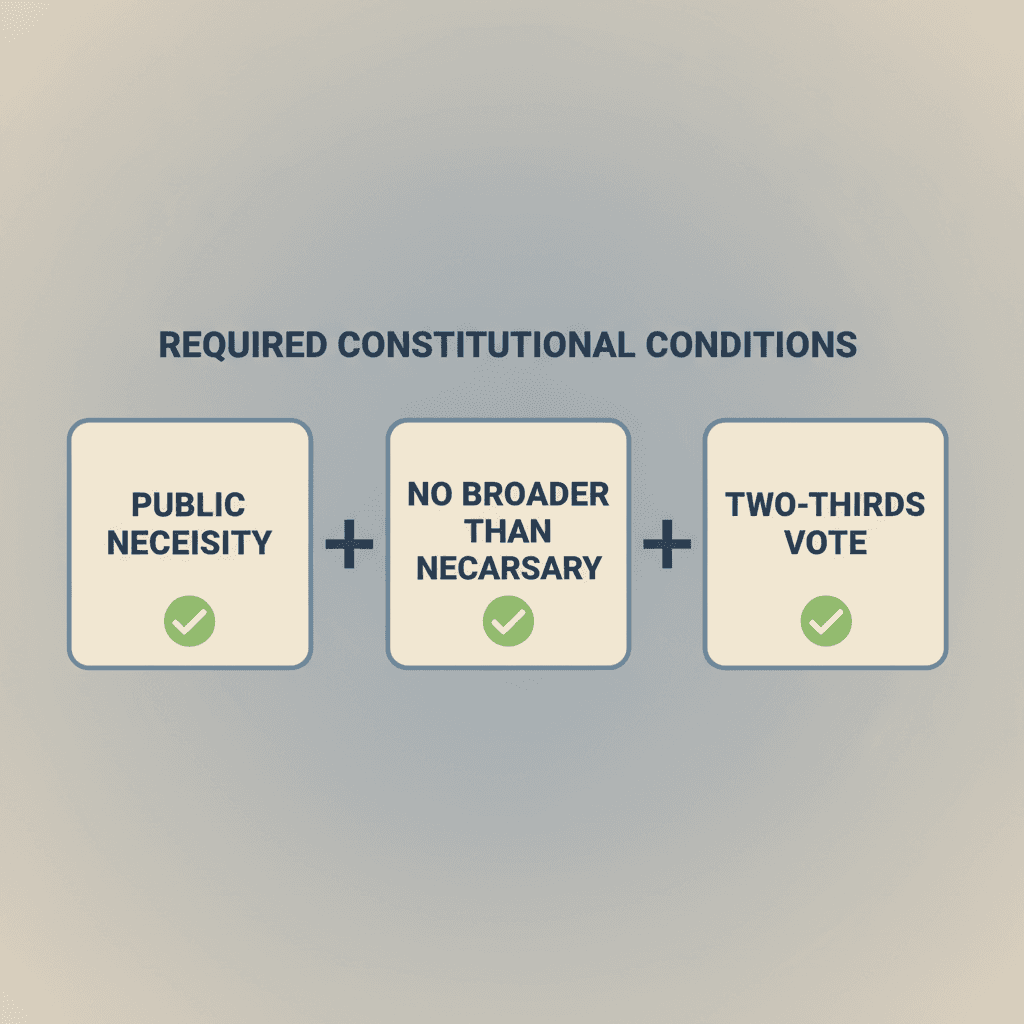
Article I, Section 24(c) of the Florida Constitution sets three conditions. All three must be met before an exemption is constitutionally valid.
Public necessity statement
The law must state the public necessity that justifies the exemption. "We decided to keep this confidential" is not enough. The Legislature must explain the specific reason that access would harm a genuine public interest.
The Florida Supreme Court has enforced this requirement. In Halifax Hospital Medical Center v. News-Journal Corporation, 724 So. 2d 567 (Fla. 1999), the Court struck down a statute closing parts of hospital board meetings because it did not meet the constitutional standard of specificity and was broader than necessary. In Bryan v. State, 753 So. 2d 1244 (Fla. 2000), the Court upheld an exemption for certain prison records because the Legislature set out the public necessity: personal safety of prison officials and inmates.
No broader than necessary
The exemption must be written no broader than is needed to accomplish the stated purpose. A statute that sweeps in records not tied to the stated public necessity fails this test. Courts read exemptions narrowly in part because they are looking for the Legislature to have written them narrowly.
Two-thirds vote of each house
A public records exemption is not a normal bill. It needs a two-thirds vote of the membership of each house of the Legislature. A bare majority cannot close public records. This higher threshold is how the Constitution keeps the access right meaningful even when the Legislature wants to narrow it.
For the full picture of how courts apply these constitutional limits when agencies stretch an exemption, read how Florida courts read public records exemptions narrowly.
What is the Open Government Sunset Review Act?
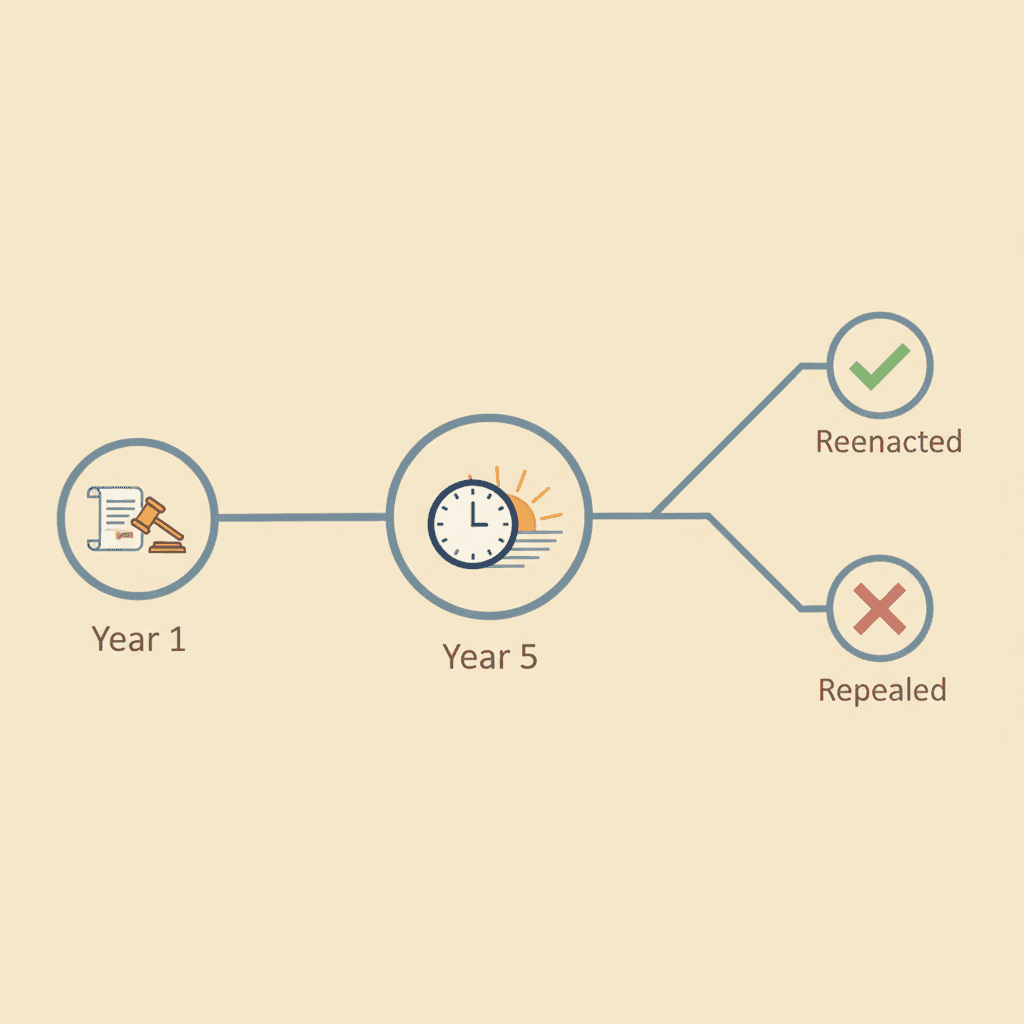
Section 119.15, Florida Statutes, is the Open Government Sunset Review Act. It creates a review cycle that applies to most public records exemptions. Under this system, most new exemptions do not last forever. They expire on a set date unless the Legislature acts to keep them.
The purpose is to force the Legislature to revisit exemptions. A record-keeping practice that made sense in 1999 may not make sense today. The sunset cycle keeps the exemption list from growing without limit. An exemption that still serves a public necessity gets reenacted. One that no longer does gets repealed by inaction.
When does a Florida public records exemption expire under Section 119.15?
Section 119.15(3), Florida Statutes, sets the repeal date. In the fifth year after a new exemption is enacted or an existing one is substantially amended, the exemption is repealed on October 2nd of that fifth year unless the Legislature reenacts it.
When the Legislature reenacts an exemption, the same constitutional conditions apply. The two-thirds vote requirement from Article I, Section 24(c), Florida Constitution, applies on reenactment, not just on initial creation. AGO 03-18. Reenactment is not a rubber stamp.
What exemptions does Section 119.15 not apply to?
Two categories are carved out. Section 119.15(2)(a) and (b), Florida Statutes, exclude:
- Exemptions required by federal law. If a federal statute or federal regulation requires the state to keep certain records confidential, that exemption is not subject to the state sunset cycle.
- Exemptions that apply solely to the Legislature or the State Court System. Each branch keeps some control over its own records outside the Act.
If neither carve-out applies, the exemption is on the sunset clock.
What about exemptions created before 1993?
Article I, Section 24(d) of the Florida Constitution grandfathered exemptions that were in effect on July 1, 1993. Those remain in effect until the Legislature repeals them. Court rules that limited access before the 1992 amendment also survive.
This means that some older exemptions were never required to go through the two-thirds vote, public necessity, and narrow-tailoring process. If an agency claims one of these older exemptions, check when it was enacted. If it was on the books before July 1, 1993, it survived by grandfathering, not by meeting the modern constitutional standard.
What happens to records made before an exemption is repealed?
Records made before the repeal date are not automatically public when an exemption expires. Section 119.15(7), Florida Statutes, provides that records made before the date of a repeal may not be made public unless otherwise provided by law.
So the sunset has a two-sided effect. Records created after the exemption is repealed are no longer covered by the now-repealed exemption. Records created while the exemption was in force remain subject to the same protection that existed when they were made.
Why does this matter to me as a requester?
When an agency claims an exemption, you can ask three questions:
- Which general law creates the exemption? If the agency cannot name a statute, the exemption does not exist.
- Is the exemption still in effect? Check whether the statute has been repealed under the sunset framework. An exemption the Legislature let expire is no longer good law.
- Does the statute meet the public-necessity-and-no-broader-than-necessary standard the Constitution requires? A statute that was challenged and struck down in court is not a valid exemption for your record either.
Most exemptions on the books today have been through the proper process. These questions are for the rare cases where an agency claims an exemption that does not match a current statute or where the statute has not been reenacted after a sunset.
For what to do when an agency denies your request, see what to do if your Florida public records request is denied.
Related
- Florida Constitution Article I, Section 24: your right to public records
- How Florida courts read public records exemptions: narrowly
- Are records of an active criminal investigation public in Florida?
- Are public employee personnel records public in Florida?
- Are 911 calls public records in Florida?
- Are crash reports public in Florida? (and the 60-day rule)
Frequently asked questions
- Who can create a Florida public records exemption?
- Only the Legislature. Courts cannot create a public records exemption. Section 119.011(8), Florida Statutes, defines an exemption as a provision of general law. Wait v. Florida Power and Light Company, 372 So. 2d 420, 425 (Fla. 1979).
- What does the Florida Constitution require for a public records exemption to be valid?
- Article I, Section 24(c) requires three things: the law must state with specificity the public necessity justifying the exemption, be no broader than necessary to accomplish the stated purpose, and pass by a two-thirds vote of each house.
- What is the Open Government Sunset Review Act?
- It is the Florida statute, Section 119.15, Florida Statutes, that reviews and sunsets public records exemptions. Most new exemptions are automatically repealed on October 2nd of the fifth year after enactment unless the Legislature reenacts them.
- When does a Florida public records exemption expire?
- Most new exemptions sunset on October 2nd of the fifth year after enactment unless the Legislature reenacts them. Section 119.15(3), Florida Statutes. Federal-law-required exemptions and exemptions that apply solely to the Legislature or the State Court System are not subject to the sunset. Section 119.15(2)(a) and (b), Florida Statutes.
- Does the two-thirds vote requirement apply when an exemption is reenacted?
- Yes. The two-thirds vote requirement under Article I, Section 24(c), Florida Constitution, applies when an exemption is readopted under the Open Government Sunset Review Act, not just when it is first created. AGO 03-18.
- What happens to records made before an exemption is repealed?
- Section 119.15(7), Florida Statutes, provides that records made before the date of repeal may not be made public unless otherwise provided by law. New records made after the repeal are not covered by the now-repealed exemption.
Not legal advice. Educational and informational content only. Reading this site does not create an attorney-client relationship. For advice on a specific matter, consult a licensed Florida attorney.