What Governmental Entities Are Covered by Florida's Public Records Act?
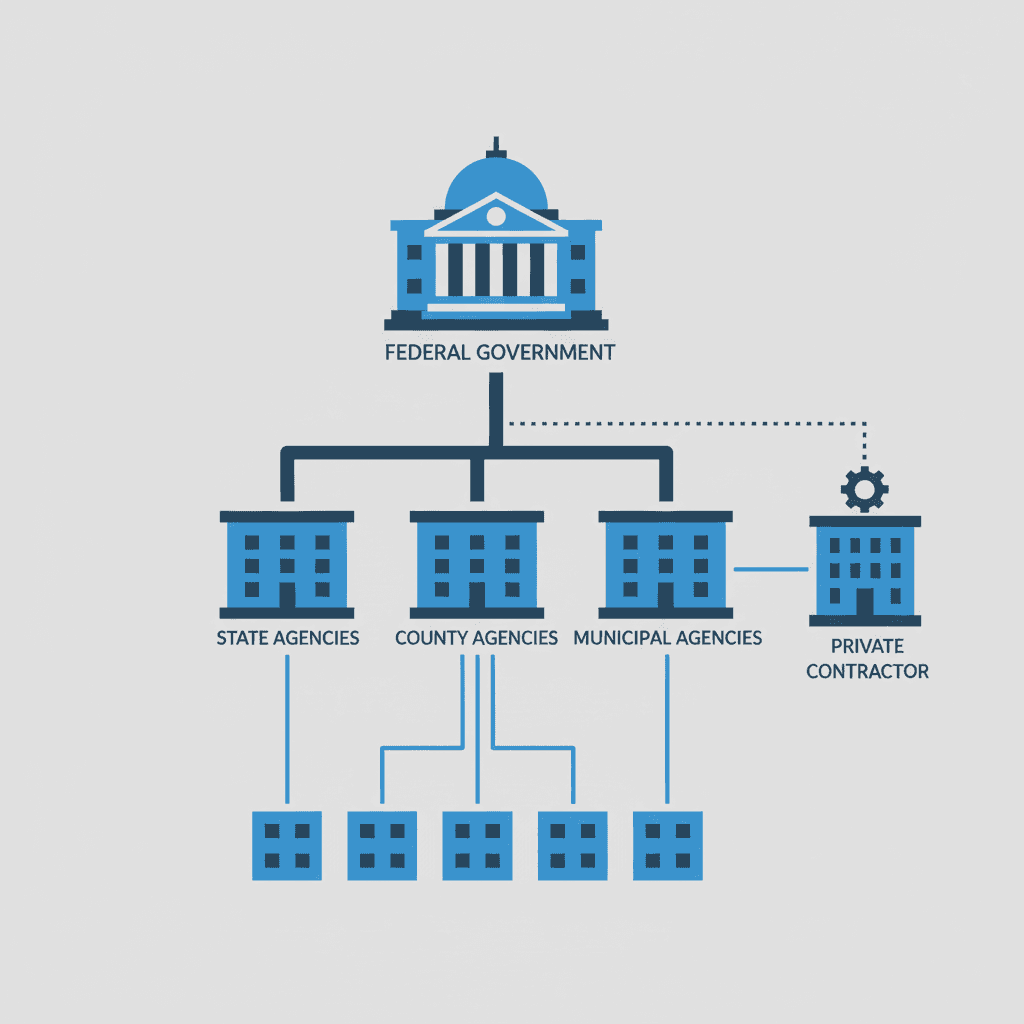
After reading this, you will know whether the entity you want records from is covered by Florida's Public Records Act, and how to handle the harder cases involving private contractors and non-executive branches.
Who is covered in plain terms?
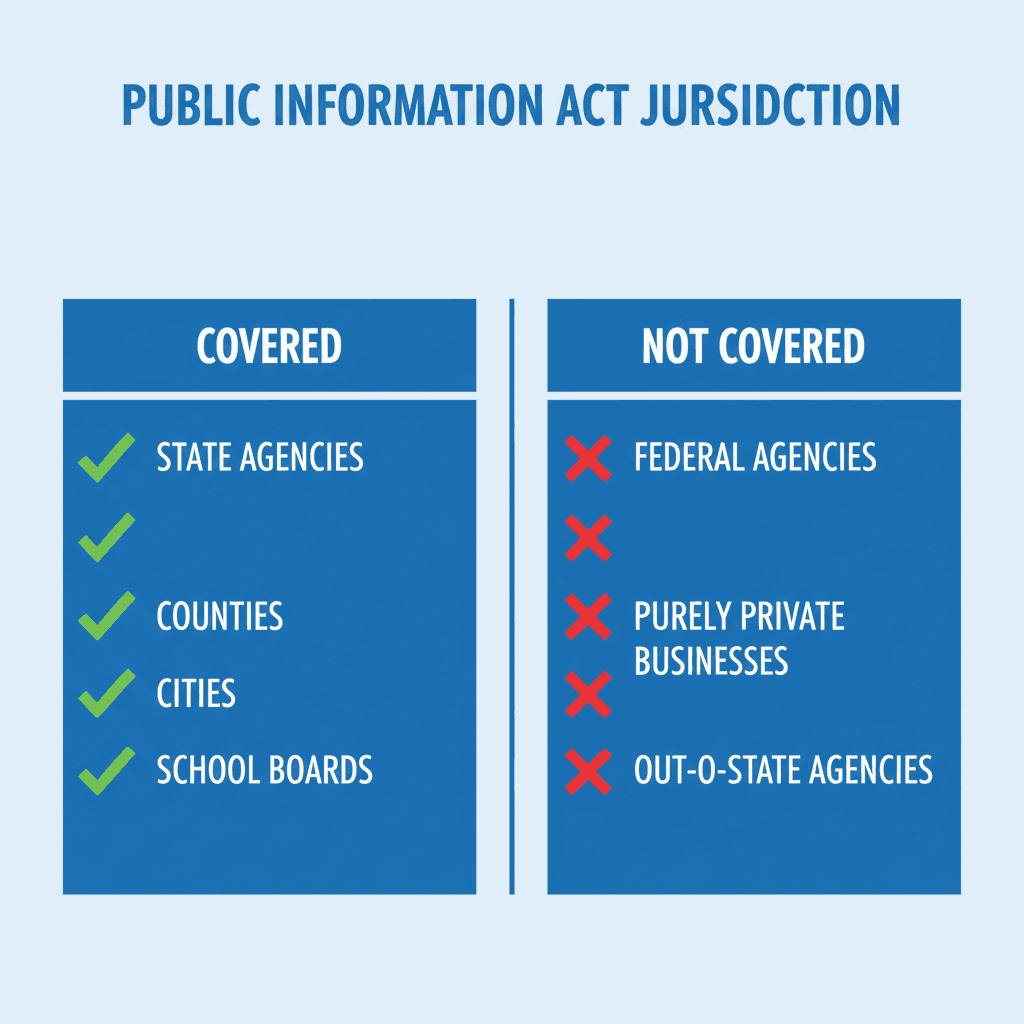
State, county, and municipal agencies are covered. Private contractors are covered when they act on behalf of an agency. The federal government is not covered. Out-of-state agencies are not covered. Courts are covered under a separate court rule, not Chapter 119. The Legislature is covered under the Florida Constitution's access right, not Chapter 119 directly.
Are state, county, and municipal agencies covered?
Yes. Section 119.011(2), Florida Statutes, defines "agency" to include every state, county, district, authority, or municipal officer, department, division, board, bureau, commission, or other separate unit of government created or established by law. That sweeps in every cabinet-level department, every independent commission, every water management district, every state university, every county, every municipality, every school board, every sheriff's office, every police department, and every special district.
Are private contractors acting on behalf of an agency covered?
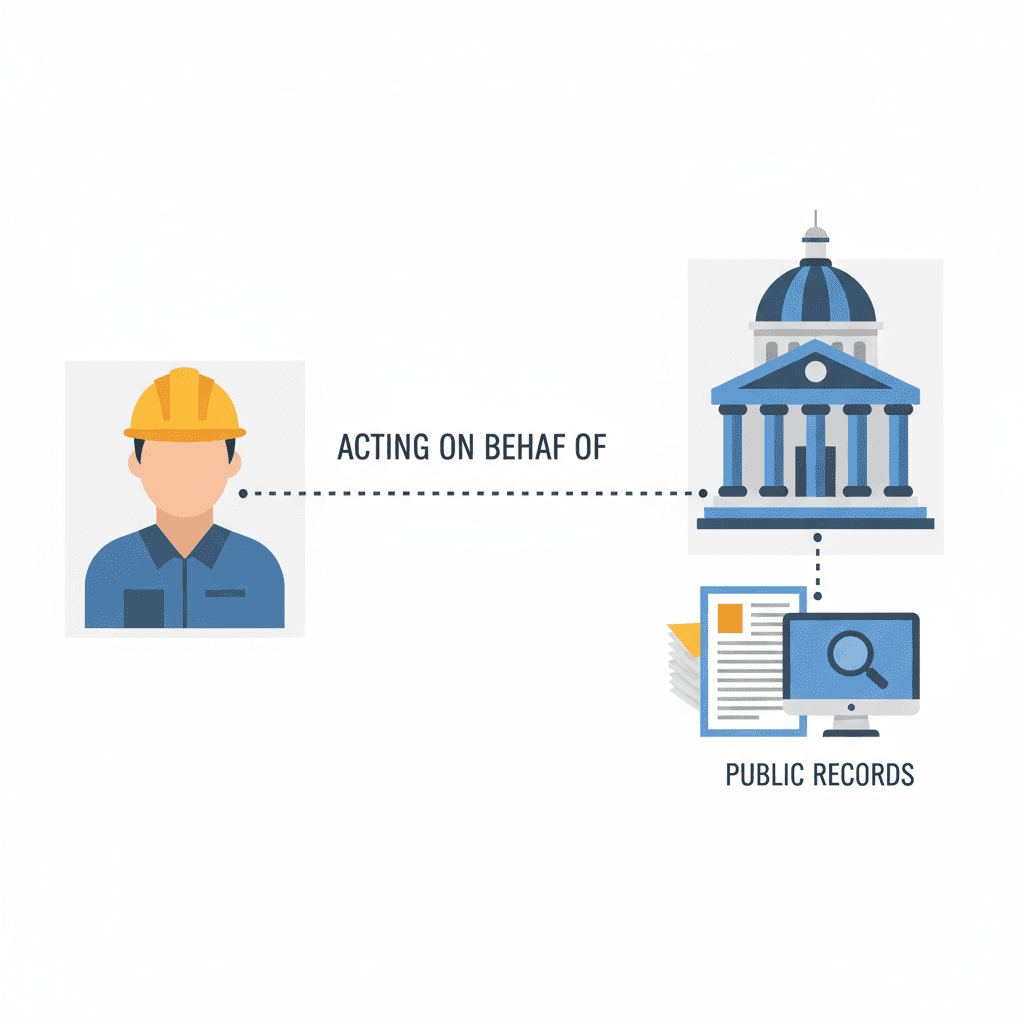
Yes, when the private entity is acting on behalf of a public agency. The same definition of "agency" in Section 119.011(2) includes "any other public or private agency, person, partnership, corporation, or business entity acting on behalf of any public agency." The Florida Supreme Court confirmed that this broad definition prevents agencies from avoiding disclosure by delegating work to private entities. News and Sun-Sentinel Company v. Schwab, Twitty and Hanser Architectural Group, Inc., 596 So. 2d 1029 (Fla. 1992).
Is the federal government covered?
No. Federal agencies are governed by the federal Freedom of Information Act, a separate law with separate procedures. Florida's Public Records Act does not reach federal agencies or federal courts.
How does Florida define "agency" under Section 119.011(2)?
The definition is intentionally broad. It covers every state, county, district, authority, or municipal unit of government created or established by law. It also covers private entities acting on behalf of those governmental units. Courts read the access right broadly and the exemptions narrowly.
The definition covers boards, commissions, districts, authorities, and special districts at every level. Community development districts, mosquito control districts, port authorities, transit authorities, and library cooperatives all fall within it. If the entity was created by law or performs a public governmental function, it is almost certainly covered.
What is the "acting on behalf of" test for private contractors?
Two tests have developed in Florida courts for determining whether a private entity is acting on behalf of a public agency.
When does a private company become subject to Chapter 119?
The Florida Supreme Court in Schwab established a totality-of-factors test. Courts look at things like: the level of public funding, whether the contractor was created by the agency, whether it performs a function the agency would otherwise do itself, the degree of agency control, and whether the contractor exists primarily to serve a government purpose. No single factor is controlling. Courts weigh the whole picture.
A second, simpler test applies when there is a clear, compelling delegation of a governmental function. If a private company takes over something the agency would otherwise do itself, like operating a jail or providing fire protection, it is covered. This is called the delegation-of-function test. It does not require the full factor analysis when the delegation is clear.
What are common examples of contractors that are covered?
Private jail operators, private medical providers in correctional facilities, towing companies operating under county-rotation contracts for removal of vehicles from public streets, and companies managing airport renovations under contracts with government authorities have all been found subject to Chapter 119 in Florida courts. Charter school operators are covered for records related to the charter school's public function.
What do contracts have to say under Section 119.0701?
Section 119.0701, Florida Statutes, requires every contract for services with a contractor to include specific public-records compliance language. The contractor must keep public records, produce them on request, redact exempt information appropriately, and meet retention obligations. Contracts entered into or amended after July 1, 2016, must include the agency's custodian contact information for public records questions. Absence of the required language does not necessarily defeat coverage when the functional test is met, but it creates compliance obligations for the agency.
Is the Florida Legislature covered, and how?
Yes, but through a different path. The Legislature is not subject to Chapter 119 directly. The Florida Supreme Court held in Locke v. Hawkes, 595 So. 2d 32 (Fla. 1992), that the definition of "agency" in Chapter 119 does not include the Legislature. But Article I, section 24 of the Florida Constitution provides a constitutional right of access to records of every public body, including the Legislature. Article III, section 4(e) of the Florida Constitution extends access to legislative records specifically.
In practice, legislative records requests go to the House Clerk, the Senate Secretary, or individual member offices. Each chamber has adopted its own rules for handling these requests. The constitutional right is substantively similar, but the procedure differs from a standard Chapter 119 request to an executive-branch agency.
What about Florida court records?
Court records are public, but the judiciary is not subject to Chapter 119. Florida courts have held that the judiciary, as a coequal branch, is not an "agency" for purposes of Chapter 119. Access to judicial branch records is governed by Florida Rule of General Practice and Judicial Administration 2.420. The rule provides that the public shall have access to all records of the judicial branch except as provided in the rule, using the same constitutional foundation as Chapter 119 but through the court system's own procedures.
To get trial court records, submit a written request to the clerk of court in the county where the case was filed. For appellate records, go to the appellate court clerk. Requests under Rule 2.420 must be in writing. The fee schedule for court record copies is set by Section 28.24, Florida Statutes, which is generally higher than the Chapter 119 fee schedule.
What entities are not covered?
Federal agencies are not covered. Purely private clubs, associations, and businesses with no agency relationship to the government are not covered. Out-of-state agencies are governed by their own state's law. A homeowners association, a private business that has a government contract but does not perform a delegated governmental function, and a non-profit that merely receives some public funding without acting in place of the agency are generally not subject to Chapter 119.
Receipt of public funding alone is not enough. The Florida courts have consistently held that the test is function and delegation, not just money. See our article on what counts as a public record under Florida law for the threshold question that runs parallel to who is covered.
How do I figure out a hard case?
Three questions cut through most hard cases. First: is the entity created or controlled by Florida government? If yes, coverage is almost certain. Second: is it performing a function that a Florida agency would otherwise do itself? If yes, coverage is very likely even if it is a private entity. Third: is it spending public money under an agency contract or grant while generating records about that public function? Yes to this, combined with yes to the second question, typically brings private contractors within Chapter 119.
When coverage is genuinely unclear, send the request to both the private entity and the contracting agency. Cite Section 119.0701 and the functional test. Ask each in writing to confirm or deny whether they are the custodian of the responsive records. If the agency disclaims and the contractor refuses, that is the posture for a potential Section 119.12 attorney-fee enforcement action.
For the related question of how to actually send a request once you know who is covered, see how to request public records in Florida and our public records request letter template.
Related
- What is a public record under Florida law?
- How to request public records in Florida
- Are records of an active criminal investigation public in Florida?
- How to write a Florida public records request letter
Frequently asked questions
- Are all Florida state agencies subject to the Public Records Act?
- Yes. Every state, county, district, authority, and municipal unit of government is covered under section 119.011(2), Florida Statutes. The judicial branch operates under separate court rules, and the Legislature is reached through Article I, section 24 of the Florida Constitution.
- Are private companies covered by Florida's Public Records Act?
- A private company is covered when it is acting on behalf of a public agency, typically under a contract to perform a function the agency would otherwise perform. Records related to that public function are reachable. Section 119.0701, Florida Statutes, requires public-services contracts to include public-records compliance language.
- Are charter schools subject to Florida public records law?
- Yes, for records related to the charter school's public function. The school operator is treated as acting on behalf of the school district that issued the charter.
- Can I get records from the Florida Legislature?
- Yes. The Florida Legislature is reachable under Article I, section 24 of the Florida Constitution. The procedure runs through the House Clerk, the Senate Secretary, or individual member offices, not the standard Chapter 119 custodian process.
- Are court records public under Florida public records law?
- Court records are public, but under Florida Rule of General Practice and Judicial Administration 2.420, not Chapter 119. Requests go to the clerk of court for trial-level records or the appellate clerk for appellate records.
- Can I use Florida public records law to get federal agency records?
- No. Federal agencies are governed by the federal Freedom of Information Act, a separate law with separate procedures.
- Does receiving public funding make a private organization covered?
- Not by itself. Receipt of public funding alone is not the test under Florida law. The test is whether the private entity is acting on behalf of a public agency. Courts have held that mere receipt of funds does not subject a private entity to Chapter 119.
Not legal advice. Educational and informational content only. Reading this site does not create an attorney-client relationship. For advice on a specific matter, consult a licensed Florida attorney.