Electronic Records and Metadata Under Florida Public Records Law

TL;DR
In Florida, an electronic record is a public record. An email, a text message, a spreadsheet, a database, a Word file, a voicemail, a social media post made or received in official business are all subject to the same access rule that covers paper. The format of delivery matters. If the agency keeps the record in a digital format, the agency must give it to you in that format when you ask. You can also ask for the metadata when the metadata itself is the record you want.
Are electronic records public records in Florida?
Yes. Florida law defines a public record as all documents, papers, letters, maps, books, tapes, photographs, films, sound recordings, data processing software, or other material, regardless of physical form or characteristics, made or received in connection with official business by any public agency. Section 119.011(12), Florida Statutes.
The phrase "regardless of physical form or characteristics" is the key. It covers digital files, database entries, audio recordings, video, and any other format the agency uses. The medium does not limit the access right.
Florida courts confirmed this principle early. In Seigle v. Barry, 422 So. 2d 63, 65 (Fla. 4th DCA 1982), the court held that a computer tape used in official business was a public record subject to Chapter 119. The medium was new at the time; the rule was not.
What kinds of electronic records does Florida public records law cover?
Any digital content made or received in connection with official business is a public record. That includes the categories below.
Emails
An email sent or received by a government employee in the transaction of official business is a public record. This covers emails on a government account and emails on a personal account when used for official business. See are emails to Florida government officials public records for the full analysis.
Text messages and messaging apps
Text messages sent or received in connection with official business are public records. This applies to messages on agency-issued phones and to messages on personal phones when the content concerns official duties. The same rule applies to messaging apps such as Signal, Teams, or WhatsApp when used for government business. See are text messages from Florida elected officials public records.
Databases, spreadsheets, and word processing files
A database maintained by an agency in connection with official functions is a public record. NCAA v. Associated Press, 18 So. 3d 1201, 1207 (Fla. 1st DCA 2009). Spreadsheets, word processing documents, and other data files are covered on the same basis.
Social media posts on official accounts
Posts, comments, messages, and direct messages on official government social media accounts made in the transaction of official business are public records. Rhea v. District Board of Trustees of Santa Fe College, 109 So. 3d 851, 855 (Fla. 1st DCA 2013). The platform does not create an exemption.
What is metadata and is it a public record?
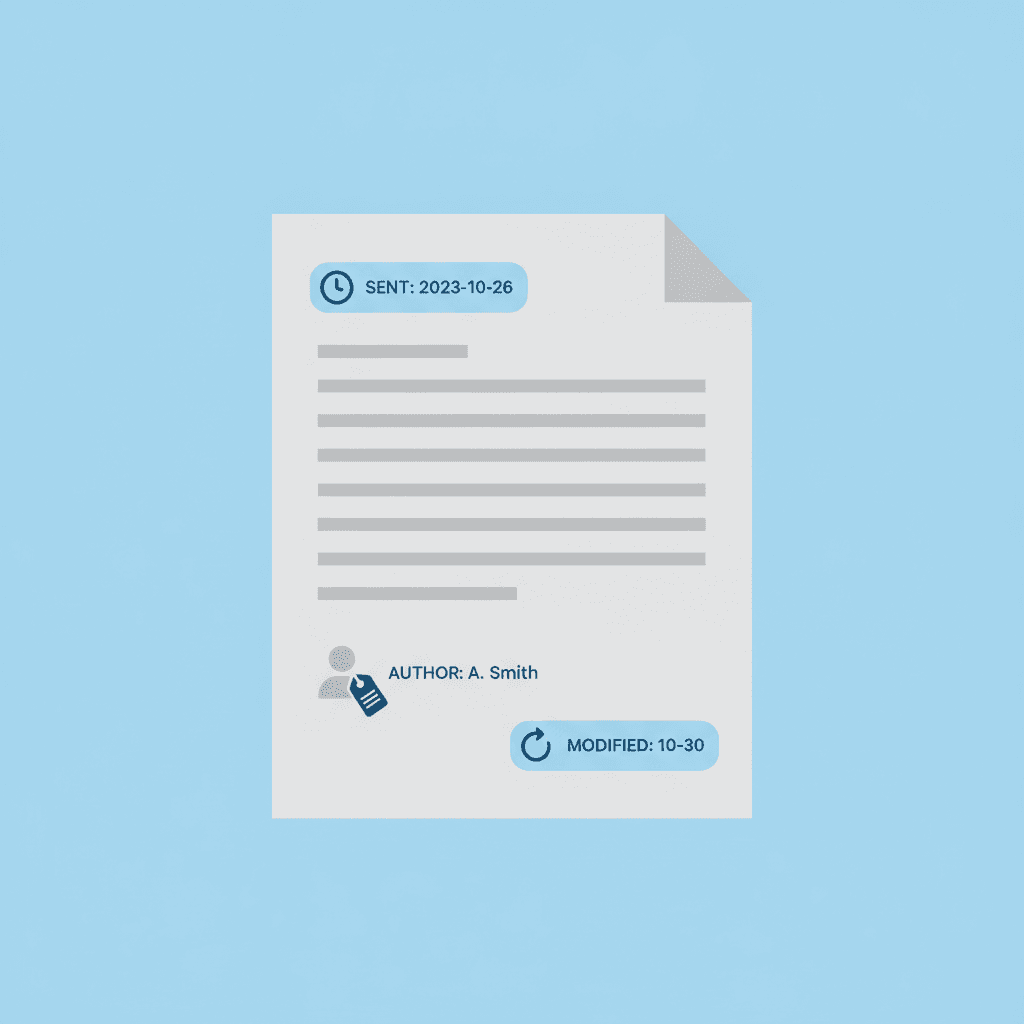
Metadata is data about data. It is the information a digital file carries about itself: who created it, when it was created, when it was last edited, what changes were tracked, what GPS coordinates are embedded in a photo, and similar details. The file itself may look clean while the metadata shows a trail.
Metadata is a public record when it is part of a record subject to Chapter 119. Section 119.01(2)(f), Florida Statutes, confirms that agencies must produce records in the format they maintain them. If the agency keeps the file with its metadata intact, you can request the file in that form.
When you want metadata, ask for it specifically. Ask for the native file rather than a PDF export. PDF exports often strip metadata. A request for the "native format" of the file, with all associated metadata preserved, puts the agency on notice of what you need.
See the in connection with official business test for how courts determine whether a record is tied to official duties.
Can I ask for the record in the format the agency uses?
Yes. Section 119.01(2)(a), Florida Statutes, says that if an agency maintains a public record in an electronic format, the agency must provide the record in that format when a person requests it. You are entitled to the digital file, not just a printout.
This rule works in both directions. The agency cannot hand you a paper printout when you asked for the digital file. And the agency cannot enter into a software agreement that prevents you from getting the digital record. Section 119.01(2)(a) prohibits software contracts that impair the right of inspection or copying.
Can an agency give me a PDF when I asked for the native file?
Not if you asked specifically for the native file. A PDF export is a different format from the native file. If the agency converted your Word document request into a PDF, you received a derivative of the record, not the record itself.
If the agency gives you a PDF when you asked for the native file, send a follow-up. Remind the agency that Section 119.01(2)(a) requires production in the electronic format maintained by the agency when that format is requested. Ask again for the native file with all metadata intact. Keep the follow-up in writing.
For guidance on challenging an agency response, see can a Florida agency refuse to produce records in the format you requested.
What about emails or texts sent from a personal phone or personal email account?
The location of the record does not determine whether it is a public record. The content and its connection to official business do. A text message sent from a city commissioner's personal phone about a pending contract vote is a public record. The phone does not make it private.
Florida courts have addressed this. In O'Boyle v. Town of Gulf Stream, 257 So. 3d 1036, 1040-1041 (Fla. 4th DCA 2018), the court analyzed whether communications on personal devices related to official town business were subject to Chapter 119. The analysis turns on whether the communication was made or received in the transaction of official business, not on the device or account used.
Practical note: when you request emails or texts, ask specifically for communications on all personal accounts and devices used for official business. The agency must search those locations. If the agency searches only official accounts, the search is incomplete.
How do I write a request for electronic records?
A request for electronic records follows the same basic rules as any public records request. Be specific about what you want. Include a date range. Name the custodian or office if you know it.
Add format language. If you want the native file, say so. Write something like: "Please produce all responsive records in the electronic format in which they are maintained by the agency, including all associated metadata, as required by Section 119.01(2)(a), Florida Statutes."
If you want emails or texts, ask for communications on all accounts and devices used for official business, not just official government accounts.
For a complete guide to writing a request, see what is a public record under Florida law and the general request guide on how Florida courts read public records exemptions.
Related
- The in connection with official business test
- What is a public record under Florida law?
- Are emails to Florida government officials public records?
- Are text messages from Florida elected officials public records?
- Can a Florida agency refuse to produce records in the format you requested?
- How Florida courts read public records exemptions: narrowly
Frequently asked questions
- Are emails public records in Florida?
- Yes. An email sent or received by a government employee in connection with official business is a public record under Chapter 119, Florida Statutes. The format does not change the rule. An email is subject to the same access requirements as a paper memo covering the same topic.
- Are text messages public records in Florida?
- Yes, when sent or received in connection with official business. A text message on a government phone or on a personal phone used for official business is a public record. The agency must search for and produce responsive texts the same way it would for emails.
- Is metadata a public record in Florida?
- Yes, when the metadata itself is the record you need. Section 119.01(2)(f), Florida Statutes, requires agencies to produce records in the format they keep them, including metadata. If you need the metadata to understand the record, ask for it specifically.
- Can I ask the agency for the file in its native format?
- Yes. Section 119.01(2)(a), Florida Statutes, says that if an agency maintains a record in an electronic format, it must provide the record in that format when requested. You do not have to accept a paper printout or a scanned image when the agency has the file in a digital format.
- Can the agency change its software to keep records out of reach?
- No. Section 119.01(2)(a) prohibits an agency from entering into a software contract that would impair the public's right to inspect or copy public records. The agency cannot use a technology choice to shrink your access rights.
- What if the email or text is on a government employee's personal account?
- The record is still public if it was sent or received in connection with official business. The location of the record does not determine whether it is a public record. The content and the connection to official duties determine it. O'Boyle v. Town of Gulf Stream, 257 So. 3d 1036, 1040-1041 (Fla. 4th DCA 2018).
Not legal advice. Educational and informational content only. Reading this site does not create an attorney-client relationship. For advice on a specific matter, consult a licensed Florida attorney.