How Do I Get a Florida Police Report After an Arrest?
By the end of this article you will know which agency to ask, what part of the file you can actually get right after an arrest, and how the active-investigation exemption changes your access over time.
What does "police report" actually mean?
"Police report" is a loose phrase that covers several different documents. Knowing which document you actually want helps you ask for the right thing.
What is the difference between a booking record, a probable cause affidavit, and the investigation file?
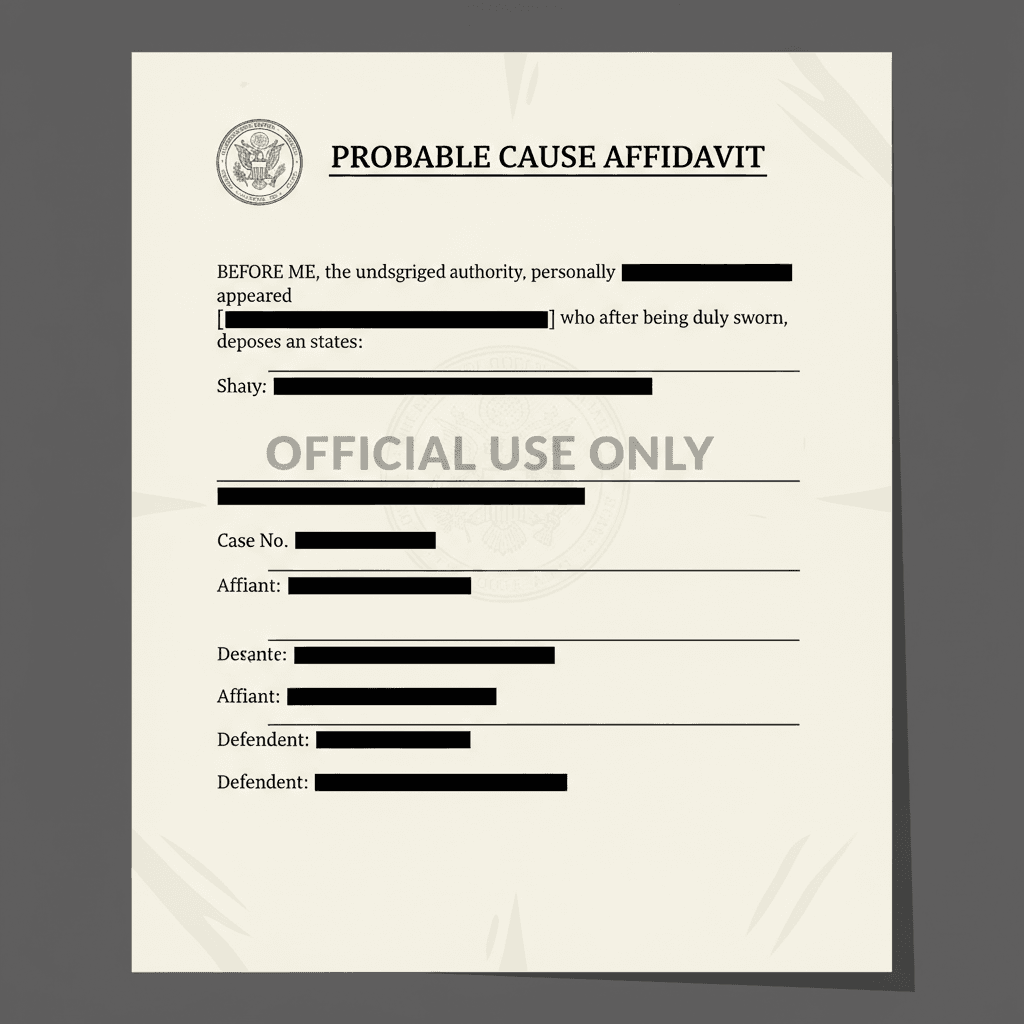
A booking record is the administrative record created when someone is processed into custody. It includes the person's name, the charges, and basic identifying information. A probable cause affidavit is the document an officer swears out to establish the legal basis for the arrest. Both are usually available quickly after an arrest as public records.
The investigation file is a different matter. It includes witness statements, field notes, interview recordings, evidence logs, and the officer's full narrative report. This file is governed by Section 119.011(3), Florida Statutes, which exempts criminal investigative and intelligence information from public disclosure while the investigation or prosecution is active. You can request it, but the agency is authorized to withhold most of it until the case closes.
What records can I get right after an arrest?
Booking records and probable cause affidavits are typically available soon after an arrest. These documents are not shielded by the active-investigation exemption the way the full investigation file is. Arrest records are also generally public. See our article on what arrest records are public in Florida for more detail on that category.
If you want body-worn camera footage from the arrest, that is a separate request with its own timing rules. See our article on how to get body cam footage of your arrest in Florida.
What is held back while the case is active?
Section 119.011(3), Florida Statutes, defines criminal investigative information as information compiled by a criminal justice agency in the course of conducting a criminal investigation. While an investigation is active or a prosecution is ongoing, the agency can withhold most of this material. That includes witness statements, interview recordings, officer field notes, evidence logs, and much of the full narrative report.
The exemption is not absolute. Redacted portions of reports that do not contain active investigative information may still be producible. And the agency must identify the specific statutory basis for any withholding. To understand how long the active-investigation exemption lasts and when it lifts, see our dedicated article on that topic.
How do I request a Florida police report step by step?
Follow these steps to get your request to the right place with the right information.
Which agency do I send the request to?
Send the request to the records unit of the agency that made the arrest. That is usually a city police department, a county sheriff's office, or a state law enforcement agency such as FDLE. The State Attorney's Office holds its own prosecution file separately; that is a different request to a different agency. The clerk of court holds charging documents and the court docket, not the arresting agency's file.
How do I address the request?
Address the request to the "Public Records Custodian" of the agency. If the agency has a dedicated records unit or a public records division, direct it there. Most agencies post their public records contact information on their websites.
What information should I include in the request?
Include the date, time, and location of the arrest. Include the case number or incident report number if you have it. Include the full name of the person arrested. Identify the specific documents you want: booking record, probable cause affidavit, incident report, or other specific file items. The more specific you are, the faster the agency can find the responsive records.
Under Section 119.01(2), Florida Statutes, you can ask for records in a specific electronic format. If you want digital files rather than paper, say so.
What will the records cost?
Short reports are usually within standard duplication fees. Florida law sets a maximum of 15 cents per one-sided copy for standard paper records under Section 119.07(4)(a), Florida Statutes. For larger files or requests that require extensive staff time, agencies may add a special service charge under Section 119.07(4)(d). See our article on how much a Florida agency can charge for public records for the full fee rules.
Include a cost cap in your request. Ask the agency to contact you before processing if costs will exceed a stated amount. That way you can decide whether to narrow the request before a large bill runs.
What opens up when the case closes?
Once a criminal case closes, the active-investigation exemption lifts. Most of the investigation file becomes accessible under Chapter 119. That includes witness statements, officer notes, and the full narrative report, subject to other specific exemptions that may apply, such as protections for victim identifying information, juvenile records, or sealed materials. For more on how this plays out in practice, see our article on when criminal investigation records become public in Florida.
A note for criminal defense lawyers: discovery vs. public records
If you represent the defendant, criminal discovery through the Florida Rules of Criminal Procedure is almost always faster and more comprehensive than a Chapter 119 public records request. The prosecutor must disclose the file under discovery rules, typically on a timeline that is tighter and more enforceable than public records law. Chapter 119 is a useful tool for journalists, family members, and others who are not parties to the case. For defense counsel, start with discovery.
Related
- Are records of an active criminal investigation public in Florida?
- When does the active-investigation exemption end in Florida?
- Are arrest records public in Florida?
- How to get body cam footage of your arrest in Florida
- How to request public records in Florida
Frequently asked questions
- How do I get a Florida police report after an arrest?
- Request it from the records custodian of the arresting agency. Include the date, time, location of the arrest, and the case number if you have it.
- How long does it take to get a Florida police report?
- Booking records and probable cause affidavits are usually available quickly, often within a few days. The full investigation file is often held back under the active-investigation exemption until the case closes.
- Does the clerk of court have the police report?
- The clerk of court holds charging documents and court filings, not the arresting agency's investigation file. For the police report, go to the records unit of the agency that made the arrest.
- As a defendant, what is the fastest way to get the police file?
- Criminal discovery through your defense attorney is faster than a Chapter 119 public records request. The prosecutor must disclose the file under the Florida Rules of Criminal Procedure, often on a tighter timeline than public records law.
- What is the active-investigation exemption?
- Section 119.011(3), Florida Statutes, exempts criminal investigative information from public disclosure while an investigation or prosecution is active. Once the case closes, most of the file becomes accessible.
- Can I request the records in electronic format?
- Yes. Section 119.01(2), Florida Statutes, requires agencies to provide records in the format you request if they maintain the records in that format. Ask for native digital files if you prefer them over paper.
Not legal advice. Educational and informational content only. Reading this site does not create an attorney-client relationship. For advice on a specific matter, consult a licensed Florida attorney.